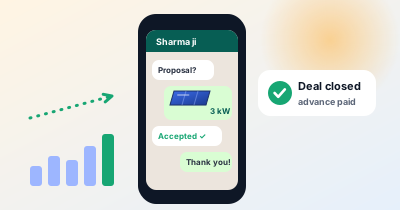
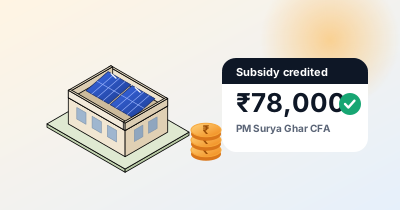
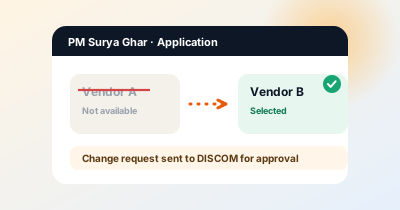
If you want to know how to get solar leads in India in 2026, the honest answer is that no single channel is enough, and that small installers do best with two or three run consistently rather than twelve they dabble in. Below is every realistic option — portal, referrals, groups, directories, ads, partners, societies, events, C&I — with its cost in time or money and the first step to take this week.
Written for a 2–10 person installer or EPC. If your problem is losing the enquiries you already get, read the playbook for closing rooftop solar deals instead.
The 12 lead channels at a glance
| Channel | Speed | Cost | Lead quality | First step this week |
|---|---|---|---|---|
| PM Surya Ghar portal listing | Slow to set up | Bank guarantee + paperwork | High intent, subsidy-ready | Check profile and districts |
| Customer referrals | Days | Free or small thank-you | Best of all | Call 10 past customers |
| WhatsApp & society groups | Days | Time only | Good, very local | Join 3 RWA groups |
| Google Business Profile & local SEO | Weeks | Free + your time | High intent | Claim and verify profile |
| Website with savings calculator | Weeks | Hosting / tool cost | Pre-qualified | Add a bill-to-savings form |
| Electricians, dealers, builders | Weeks | Commission per job | Good, warm | Visit 5 shops |
| RWA / society tie-ups | 1–3 months | Time + a free session | Excellent, bulk | Ask for a meeting slot |
| Exhibitions and local events | Event-dated | Stall fee, varies widely | Mixed | Get one expo rate card |
| IndiaMART / JustDial | Immediate | Plan fee + lead credits | Mixed, price-led, shared | Create free seller profile |
| Meta lead ads | Same day | Daily budget you set | Cold, needs instant calling | Build one instant form |
| Google Search ads | Same day | Daily budget, costlier clicks | High intent | Pick 10 local keywords |
| Cold outreach for C&I | Months | Sales time | High value, slow | List 20 high-bill units |
How to get solar leads without paying for them
1. Your PM Surya Ghar portal listing and DISCOM empanelment
Under the MNRE scheme guidelines, households pick their vendor on the national portal and the central subsidy applies only when a registered vendor does the installation. So your listing is a real lead source: the buyer has already decided to go solar and is only choosing who does it. MNRE also runs a vendor rating framework and publishes a deactivated-vendor list, so your record is visible.
Cost: upfront, not per lead — a ₹2.5 lakh bank guarantee per state (₹25 lakh national) plus documentation; see our guide to PM Surya Ghar vendor registration. Effort: weeks of paperwork, then little. This week: check that every district you serve is selected and your listed number is answered. As of September 2026 the portal shows the scheme running till 31 March 2027, so confirm before registering afresh.
2. Referrals — the channel most installers under-use
A neighbour who has watched a system work for six months is the most convincing salesperson you will have, yet most installers never ask systematically. Ask at the two moments the customer is happiest: just after commissioning, and after the first low bill.
Ask for a name, not a favour — "Is there one neighbour or relative who complains about their bill?" beats "please refer us". Decide your thank-you, such as a free cleaning visit for a referral that converts, and say it out loud.
Cost: effectively free. Effort: an hour of calls a week. This week: call ten past customers, fix anything pending, then ask for one name.
3. WhatsApp, RWAs and housing society groups
Plenty of solar decisions get discussed in a society group long before anybody calls a vendor. Being present there — as a helpful member, not a broadcaster — is how many installers get their first jobs. The rule is simple: answer questions, never spam.
Offer to check a member's bill and send back a rough size and saving. Note that the WhatsApp Business Messaging Policy requires opt-in permission before you message someone and that opt-outs be honoured, so add numbers only when asked to.
Cost: free. Effort: 20 minutes a day. This week: ask three society secretaries for permission to join and answer solar questions.
4. Google Business Profile and local SEO
"Solar installer near me" searches are the highest-intent free traffic you can get. A verified Google Business Profile with real photos, service area, hours and genuine reviews puts you on the map.
Follow Google's rules or risk suspension: the profile name must be your real business name, with no keywords or location stuffed in. If you work from home, Google's guidance for service-area businesses is to hide the address and set a service area, which should not normally extend beyond about two hours' driving from your base.
Alongside it, a page per locality you serve picks up long-tail searches over a few months — the only channel that keeps producing after you stop paying.
Cost: free. Effort: two hours, then an hour a month. This week: claim and verify the profile, upload ten photos, ask five customers for a review.
5. A website with a savings calculator as the lead magnet
A brochure website collects nothing. A website answering "what will this cost me and what will I save" collects phone numbers. The natural lead magnet is a calculator: the visitor enters their monthly bill and gets a system size, subsidy and saving, with the option to request a full proposal.
It pre-qualifies: a visitor who typed in a ₹4,000 bill is not an anonymous form fill. Build a simple version using our guide on sizing a system from the electricity bill, or point visitors at a ready-made solar subsidy and savings calculator meanwhile.
Cost: hosting plus the calculator. Effort: a weekend. This week: add one form above the fold asking only bill amount, city and WhatsApp number.
Partner channels: selling through other people's customers
6. Electricians, hardware dealers and builders
Electricians get called when the bill is high or the load is being increased. Hardware shops meet every homeowner doing renovation. Builders decide about rooftops before the slab is cast. All three meet your customer first.
Make the offer concrete: a fixed commission per closed job, paid quickly and without argument, plus a promise not to embarrass them in front of their customer. One reliable electrician sending two enquiries a month beats a dozen "keep me in mind" conversations.
Cost: a commission per job — build it into your pricing. Effort: ongoing. This week: visit five shops near your last installation with photos and a one-page commission note.
7. RWA and society tie-ups for group installations
Group installations are the most efficient work a small installer can get: one site, shared logistics, neighbours who reassure each other. Approach the RWA, not individual flats, and offer a free 30-minute session on the subsidy, net metering and what a survey involves.
Be straight about the complications: a common rooftop raises questions of who owns the roof, sanctioned load and how the benefit is shared, and net metering rules differ by DISCOM. Our net metering process guide makes a useful handout.
Cost: your time. Effort: one to three months per society. This week: ask one secretary for ten minutes at the next residents' meeting.
8. Exhibitions, melas and local events
Trade exhibitions bring dealers and B2B contacts; local melas and society fests bring homeowners. Both work if you go with a reason to talk: a live calculator on a tablet beats a banner, because visitors get a number for their own bill.
Stall fees vary hugely between a district fair and a national expo, so ask for the rate card and weigh it against the proposals you could make in two days. This week: find one local event in the next 60 days.
Paid channels: buying attention for solar leads in India
9. IndiaMART and JustDial
These are the fastest way to see enquiries, and the most variable in quality. On IndiaMART a free seller profile is possible; paid plans push your listing higher and come with BuyLead credits, consumed when you contact a buyer. Other directories sell similar packages.
The trade-off is plain: the same request usually goes to several suppliers, so you compete on speed and price from the first second, and many enquiries are traders or rate-comparers. Track cost per closed job, not cost per lead, for three months before buying a bigger plan.
Cost: plan fee plus credits; ask for current pricing. Effort: daily, since these leads go stale in hours. This week: create the free profile with real photos, GST details and a proper catalogue.
10. Meta lead ads on Facebook and Instagram
Facebook ads for solar generate volume quickly, but these people were not searching for solar — they were scrolling. Expect a lower conversion rate.
What makes a good solar ad in India:
- A specific offer, not "go solar": "Send your bill, get a free rooftop plan with subsidy and monthly saving."
- Photos of your own installations, and your city named in the copy.
- An instant form with three fields — name, WhatsApp number, monthly bill. Every extra field costs leads.
- Follow-up within minutes, because interest decays fast.
Two platform points: running these forms means accepting Meta's Lead Ad Terms, and form fields must not ask for sensitive personal information — disability, religion, race, financial status — without Meta's prior written permission.
Cost: the daily budget you set; start small and measure your own cost per site visit rather than trusting published figures. This week: set up a Business Page and build one instant form.
11. Google Search ads
Search ads reach people already looking — "solar panel installation in [city]", "3kW price". Intent is higher than social, so clicks cost more. Stay narrow: your city only, ten to twenty tight keywords, negatives for "job", "dealership" and "free", and a landing page matching the search.
Send the click to the calculator page, not the homepage, and pause ads at night rather than pay for clicks nobody follows up.
Cost: your daily budget. Effort: half an hour a week on search terms. This week: write down the exact ten phrases your customers would type.
12. Cold outreach to high-bill businesses (C&I)
Commercial and industrial rooftops are a different business: bigger systems, no residential subsidy, longer decisions, and buyers comparing generation guarantees and payback rather than price per watt. One factory can be worth twenty homes.
List local units with large roofs and high consumption — cold storages, hotels, schools, hospitals, small factories, petrol pumps. Walk in with a one-page indicative payback for their tariff category and ask for a month's bill to firm it up. Do not spray bulk SMS or automated calls: under TRAI's rules, senders of promotional messages must be registered and use designated headers and number series.
Cost: sales time. Effort: months. This week: list twenty businesses within 15 km and visit five.
A 30-day rooftop solar lead generation plan
You cannot start twelve channels at once. This sequence puts the free, compounding ones first and adds paid volume last.
- Week 1 — fix the basics. Claim and verify your Google Business Profile, upload ten photos, collect five reviews. Check your PM Surya Ghar districts. Start a lead tracker: date, name, source, bill, stage, next action.
- Week 2 — harvest what you have. Call past customers for referrals. Visit five electricians and dealers with a written commission offer. Ask three societies for a meeting slot.
- Week 3 — build the magnet. Get a bill-to-savings calculator, or at least a short enquiry form, onto your website. Create the free IndiaMART profile. Write two locality pages.
- Week 4 — add paid volume. Launch one Meta lead ad and one small Google Search campaign, both pointing at the calculator page. Make it a rule that every new lead gets a WhatsApp reply within 10 minutes in working hours.
At day 30, review the tracker by source. Kill nothing yet — paid channels need weeks, referrals months — but note which source produced site visits, not just phone numbers, and double down on those in month two.
Leads are worthless if you are slow
Every channel above ends in the same place: a phone number and a person with a question. That homeowner is usually contacting two or three installers at once, and whoever replies first sets the terms. Ten minutes matters more than ten thousand rupees of ad budget.
So before spending on lead generation, make sure one named person watches enquiries in working hours and you can send a sized proposal the same day. Tools like PitchSun shorten that gap, but a prepared template and a disciplined team achieve most of it; what happens after the first reply is in our playbook for closing more rooftop solar deals. Learning how to get solar leads is less about a secret channel than about running three ordinary ones every week and answering fast.
Frequently asked questions
How do I get solar leads in India without paying for ads?
The free channels are your PM Surya Ghar portal listing, referrals from past customers, a verified Google Business Profile, WhatsApp and society groups, and tie-ups with electricians, hardware dealers and builders. They cost time rather than money, but they usually produce better-quality enquiries than bought leads.
Are IndiaMART leads worth it for a solar installer?
They can be, if you treat them as shared leads. A free seller profile costs nothing, while paid plans give better placement and BuyLead credits that are consumed when you contact a buyer. The same enquiry usually reaches several suppliers, so the installer who calls first and quotes properly wins. Track your own cost per closed job for three months before scaling up.
Do Facebook and Instagram ads work for rooftop solar in India?
They work for generating volume quickly, but the leads are colder than search leads because people were not looking for solar when they saw the ad. Offer something specific, such as a free savings estimate from their electricity bill, ask for as few form fields as possible, and call within minutes.
How many solar leads does a small installer need per month?
Work backwards from your own numbers. If you close roughly one in ten enquiries and want four installations a month, you need about forty genuine enquiries. Track your conversion rate for a few months rather than relying on any industry average, because it varies a lot by channel and city.
Does being registered on the PM Surya Ghar portal bring leads?
It can. Consumers choose their vendor on the national portal and the central subsidy only applies when a registered vendor does the installation, so a complete profile in the districts you actually serve puts you in front of buyers who are already committed. It is a slow channel to set up because of the bank guarantee and paperwork.
What is the fastest way to get rooftop solar enquiries this month?
Call every past customer for referrals, set up or clean up your Google Business Profile, and run one small Meta lead ad or Google Search campaign with a clear offer. Referrals and search ads give the quickest usable enquiries; portal listings and society tie-ups pay off over months.
Sources
- MNRE — Guidelines for PM-Surya Ghar: Muft Bijli Yojana, Central Financial Assistance to Residential Consumers
- MNRE — Framework for Vendor Rating Programme under PM-Surya Ghar: Muft Bijli Yojana
- MNRE — Process of Vendor Registration for PM-Surya Ghar Scheme on the National Portal (bank guarantee amounts)
- PM Surya Ghar National Portal — vendor search, deactivated vendor list and scheme timeline (accessed 24 September 2026)
- Google — Guidelines for representing your business on Google (business name, categories, service-area businesses)
- WhatsApp — WhatsApp Business Messaging Policy (opt-in and opt-out requirements)
- Meta — Lead Ad Terms
- Meta Transparency Center — Advertising Standards (restricted lead ad form fields, personal attributes)
- IndiaMART Help — How BuyLeads are allocated under different plans
- TRAI — Telecom Commercial Communications Customer Preference Regulations (TCCCPR) and 2025 amendments